




The Bacchiglione dugout canoes reveal the importance of river navigation and the wetland landscape in the Venetian region during the Early Middle Ages.
Listen to the audio
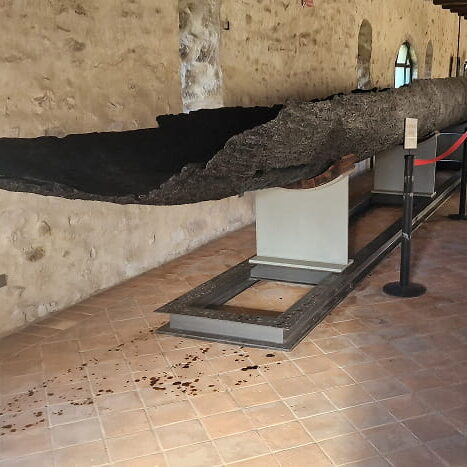
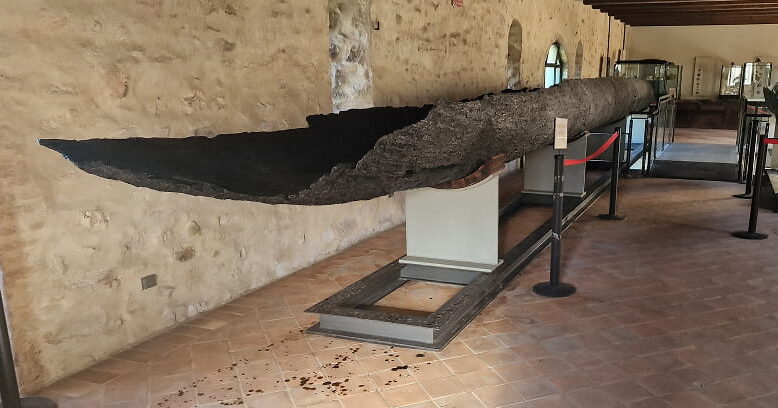
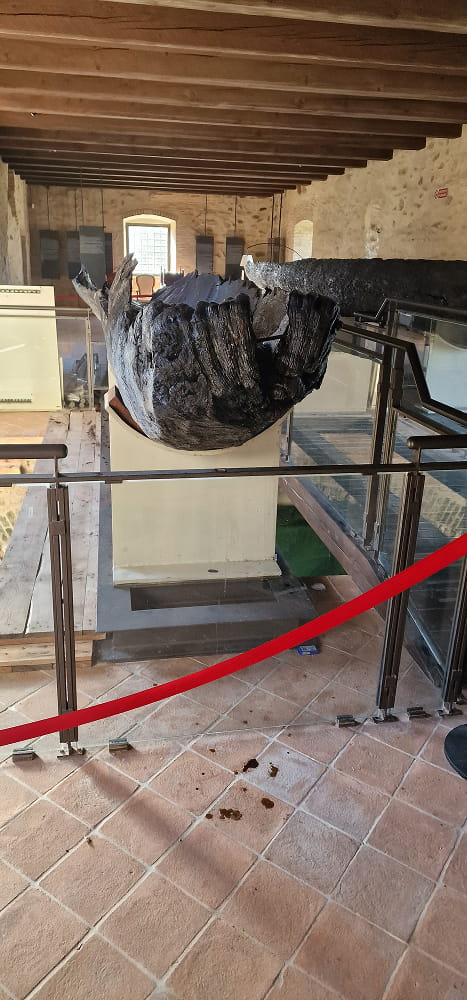
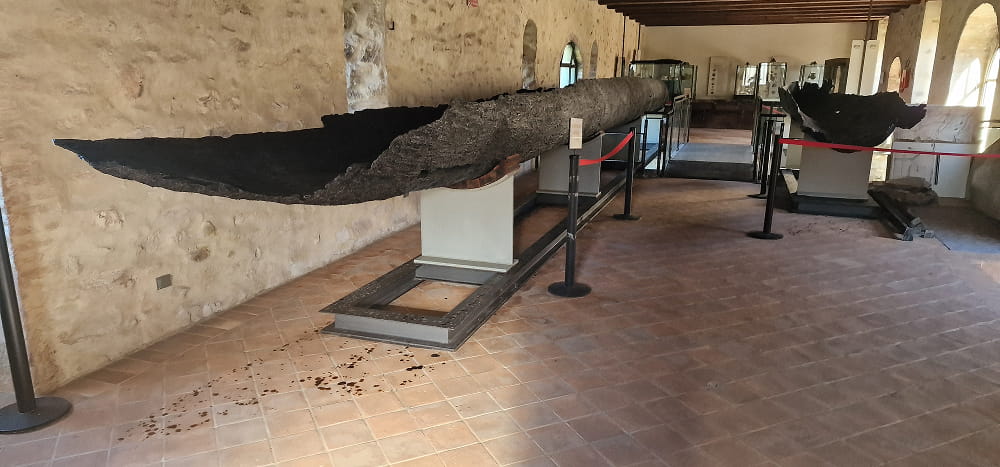
In the summer of 1972, the riverbed of the Bacchiglione yielded an exceptional discovery near Selvazzano: two ancient monoxylon boats, entirely hollowed out from a single tree trunk. The recovery, led by divers from Padua and archaeologists from the Veneto region, required a delicate system of tubular scaffolding and air bladders to lift the hulls from the mud without breaking them. To save them from dehydration, which would have crumbled them into dust upon contact with the air, the artifacts were submerged in tanks of demineralized water at 60°C and treated with special resins. Subsequent Carbon-14 analysis revealed that both boats dated back to the 8th century AD, during the height of the Lombard era.
Ciò accade perché la funzionalità/il contenuto contrassegnato come “Google Youtube” utilizza cookie che hai scelto di mantenere disabilitati. Per visualizzare questo contenuto o utilizzare questa funzionalità, ti preghiamo di abilitare i cookie: clicca qui per aprire le tue preferenze sui cookie.
In the history of Italian shipbuilding, these vessels—known in Roman times as lintres—represent a unique technological solution. Unlike in Northern Europe, where boats hollowed from tree trunks were the starting point for more complex planked ships, the Italian tradition preferred the evolution of the raft. Nevertheless, dugout canoes remained in use for millennia, from the Bronze Age through the Middle Ages. This was not due to a lack of innovation, but because they were perfectly suited for navigating shallow, inland waters with agility. Their ultimate disappearance was not caused by a technical limitation, but by the progressive depletion of the large oak forests, whose monumental trunks were indispensable for building such massive hulls.
The two displayed dugouts are particularly striking because of their size: the larger one measures an impressive 15.75 meters in length and could carry a load of 3 to 4 tons with a crew of just two or three people. The craftsmen of the time masterfully exploited the natural shape of the tree, carving the stern from the thicker part near the roots and the prow from the upper section. Interestingly, they were maneuvered only by punting poles or paddles, without the aid of sails or complex rudders. An incision along the upper edge leads researchers to hypothesize that the two hulls could be coupled together like a catamaran, or used together as floating supports for a mobile bridge or a watermill.
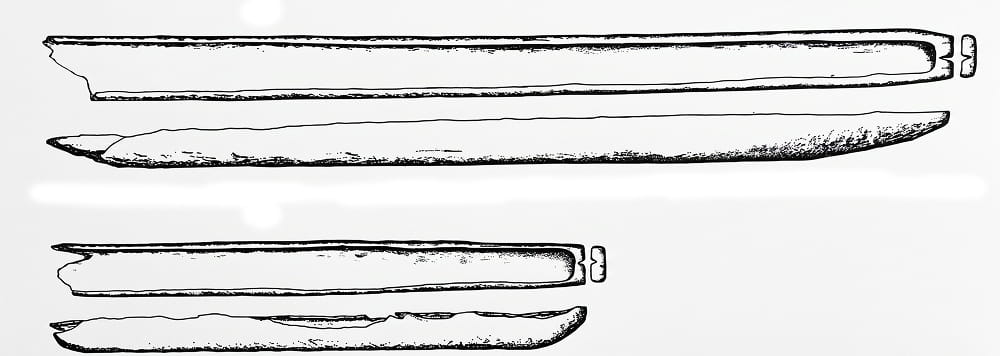
Local archaeology also reveals interesting variations of these boats: some medium-sized dugouts found in the Padua area feature a transom stern, specifically designed to carve a rower’s seat directly into the wood. In one specific case, a specimen found in Saccolongo in 1950, the stern has a raised bottom to improve hydrodynamics and prevent the formation of water eddies. However, the most recent examples show a cruder and more archaic construction technique, signaling a decline in the quality of local river shipbuilding in later periods.
This method of navigation was vital in the Early Middle Ages. With the ruin of Roman roads and the breakdown of water management systems—which had transformed the plains into a network of swamps and dense forests—the Bacchiglione became the true highway of the region, connecting the Venetian lagoons to Pavia, the capital of the kingdom. The dugouts were the “trucks” of the era, loaded with grain, wine, timber, and hides. This trade was so lucrative that it was heavily taxed by local lords through transit tolls, sparking centuries of border wars between Padua and Vicenza. These vessels remain the symbol of an era when life, the economy, and survival depended entirely on waterways.
Listen to the audio
At the time of their discovery, the hulls were 90% covered by a thick protective layer that made the wooden surface completely unreadable. Immediately after being retrieved from the river, the vessels were stabilized with a custom-fitted metal framework to allow for safe transport. The first major preservation effort involved impregnating the wood—while it was still waterlogged—with polyethylene glycol (PEG 4000), a wax-like substance capable of preventing the wood from warping and cracking when exposed to the air. Later, to restore the dugouts to their original appearance, conservators had to carefully scrape away the external wax deposits using specialized scrapers and scalpels. Deep-seated residues within the wood’s crevices were melted away using absorbent paper sheets heated with warm air currents. The final traces trapped within the porous grain were eliminated using methylene chloride solvent packs, before stabilizing the largest cracks with silicone resin or stainless steel threaded pins. The entire process concluded with the application of a transparent acrylic resin film, which protects the wood from dust and environmental wear today.
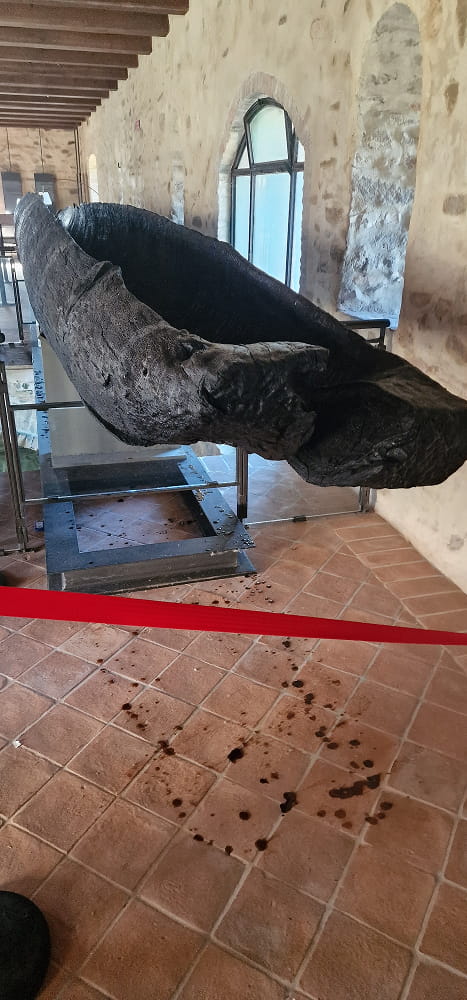
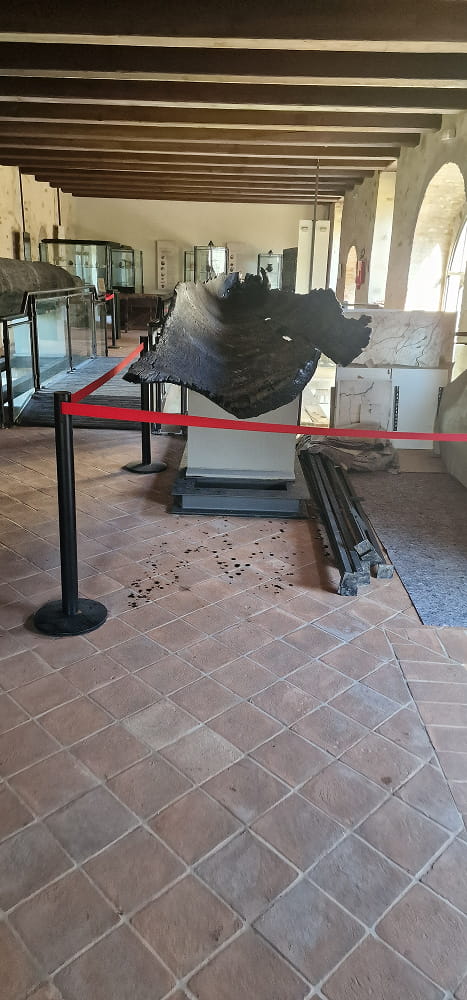
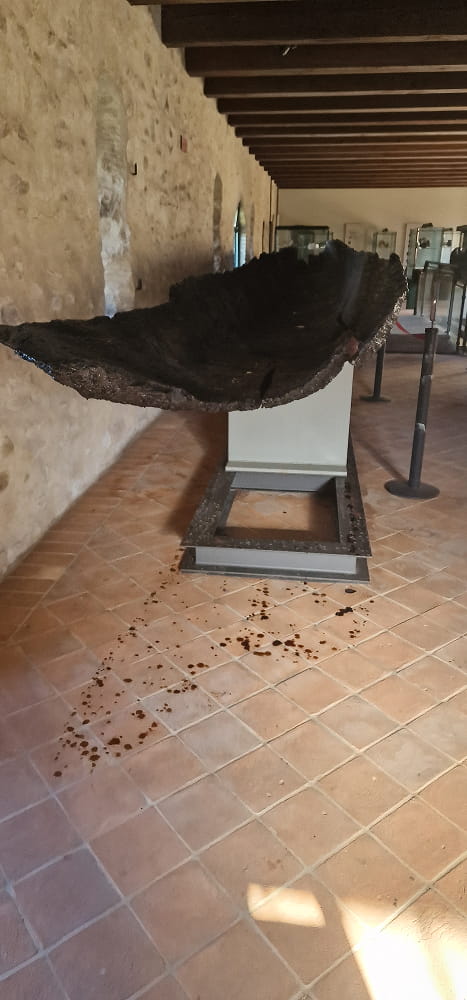
This meticulous restoration preserved not only the physical artifacts but also the biological data needed to reconstruct the Early Medieval landscape, an era characterized by a marshy environment vastly different from today’s. The territory was dominated by wetlands interrupted by strips of higher ground, along with a dense alternating pattern of water-loving woods and thickets. In the elevated areas grew majestic forests of English oaks, sessile oaks, and ash trees that reached extraordinary heights of 30 to 35 meters—monumental trunks from which early medieval builders sourced the raw material to hollow out the canoes. Along the riverbanks and channels, the scenery shifted to accommodate willows, white poplars with their distinctive silvery leaves, common reeds, and a rich display of floating vegetation like water lilies and water buttercups. Although centuries of land reclamation, agriculture, and human development have almost entirely erased this ancient Paduan ecosystem, small remnants of this wild nature still survive today in nearby protected areas, such as the Olmè Forest in Cessalto, the pocket wetlands of the lower Friulian plain, and the floating flora of Lake Fimon.
Discover the archaeological collection from the Bacchiglione River
Cookie policy
Su questo sito utilizziamo strumenti propri o di terze parti che memorizzano piccoli file (cookie) sul tuo dispositivo. I cookie sono normalmente utilizzati per consentire il corretto funzionamento del sito (cookie tecnici), per generare rapporti sull’uso della navigazione (cookie statistici) e per pubblicizzare in modo adeguato i nostri servizi/prodotti (cookie di profilazione). Possiamo utilizzare direttamente i cookie tecnici, ma hai il diritto di scegliere se abilitare o meno i cookie statistici e di profilazione. Abilitando questi cookie, ci aiuti a offrirti un’esperienza migliore.