






A chronological reconstruction of the main transformations that affected the castle over the centuries.
Listen to the audio
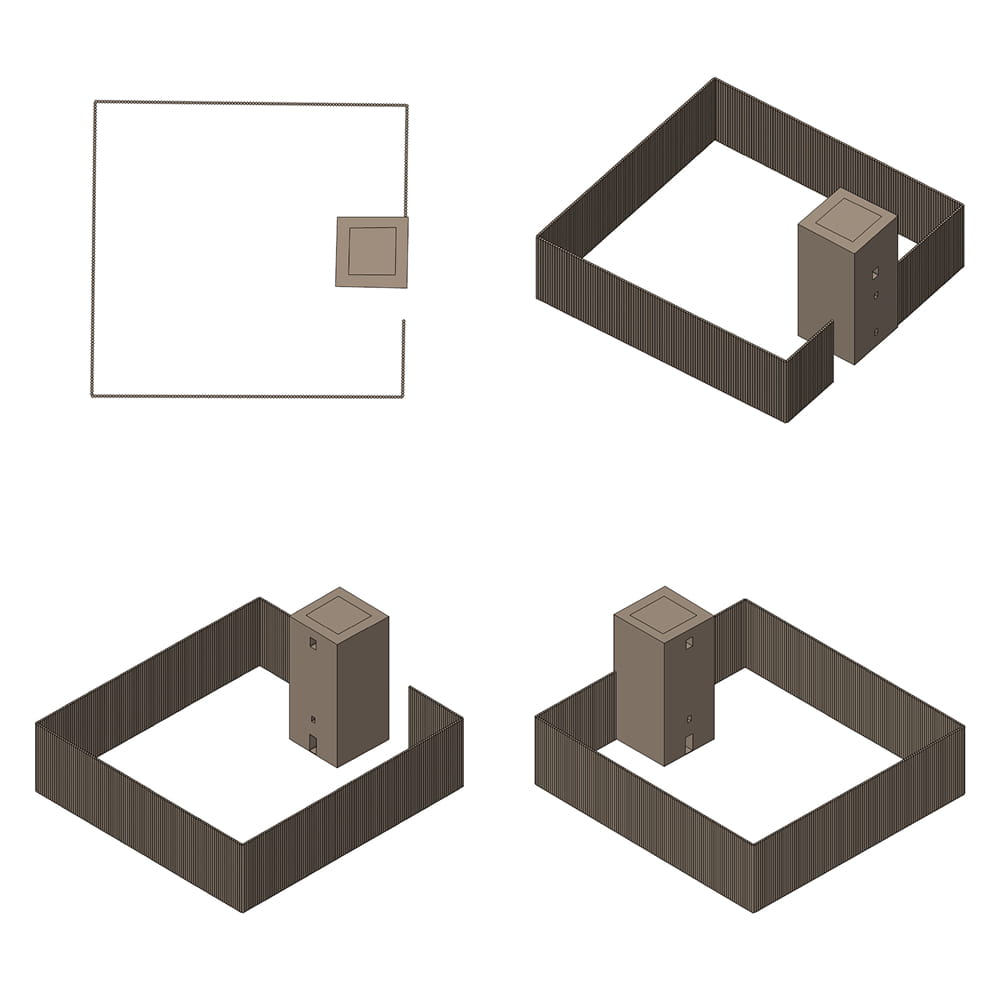
Before the year 1000, the site of San Martino was occupied by an isolated tower positioned in a dominant location along the Bacchiglione River. Its placement responded to the need to control both river and land routes within a territory fragmented among local powers. More than a permanent residence, the tower served as a surveillance outpost: a sign of authority, a refuge, and a strategic observation point within a still unstable landscape.
From a construction standpoint, it consisted of a compact vertical core with very thick walls built in local stone and scaglia rossa, designed to withstand rapid assaults. Around the tower ran a wooden palisade that enclosed a minimal yet effective defensive space. This simple configuration reveals an early but already deliberate phase, in which architecture and the river landscape worked together as a defensive system.
Listen to the audio
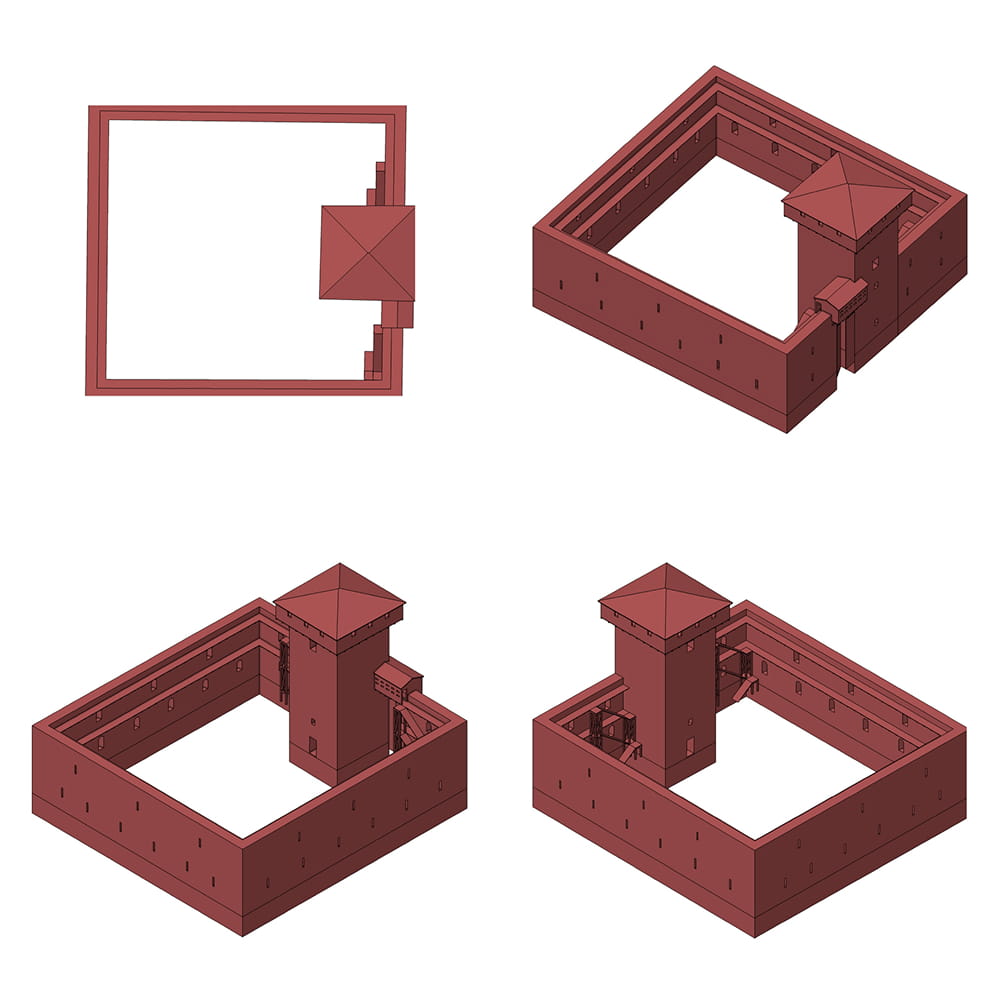
Between the 11th and 13th centuries the tower was incorporated into a larger fortified complex, transforming it into a border castle within Padua’s western defensive system. The site now assumed a stable military and administrative function, linked to the control of communications between the Padua and Vicenza areas and to the management of the surrounding territory.
The original core was reinforced and accompanied by a stone enclosure wall forming a quadrangular layout with an internal courtyard. The walls, more than one meter thick, were equipped with loopholes and arched openings for defensive observation. The ground floor housed storage areas and troop quarters, while the upper levels contained habitable rooms with hearths and services, marking the transition from a military tower to a complex architectural structure.
Listen to the audio
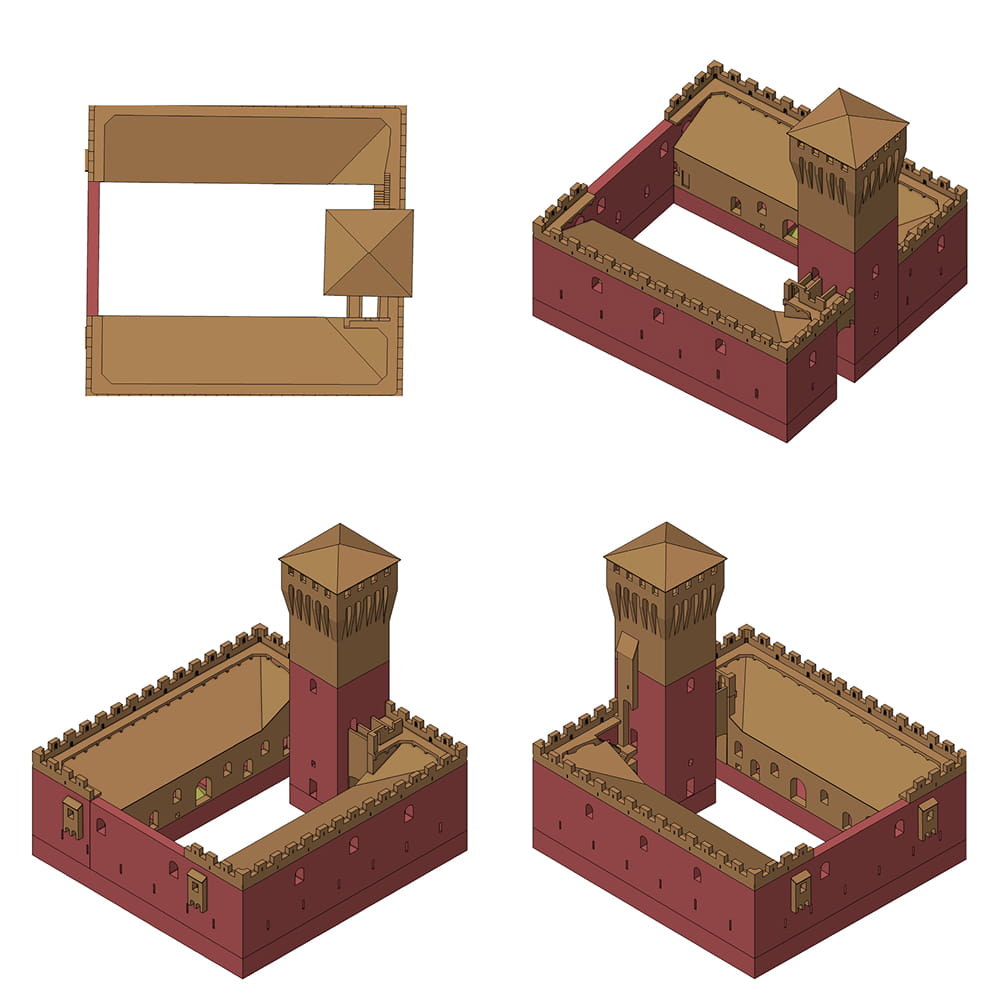
With the rise of the Carraresi family, the castle became a key military outpost in the western defense of Padua. During a period of continuous conflict, the fortress represented a vital control point over the Bacchiglione river routes and a symbol of the ruling family’s territorial strengthening policies.
The architectural interventions were radical: the tower was raised and reinforced with regular courses of bricks and reused stone. Walkways for guards and internal structures intended for garrison and storage were added. The crenellated walls, supported by projecting buttresses, improved vertical defense. The interior was organized across several habitable levels, transforming the castle into an advanced and self-sufficient fortification.
Listen to the audio
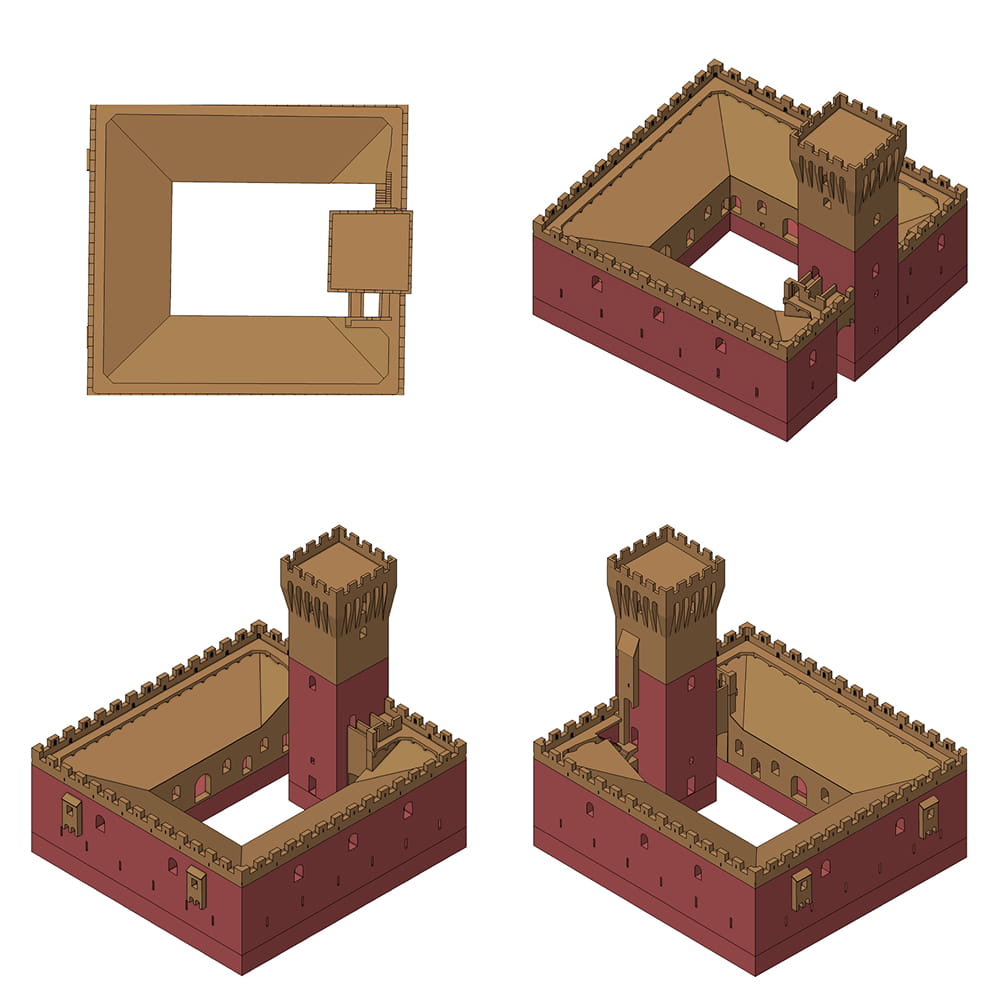
After the fall of the Carraresi, the castle maintained its strategic value but gradually developed economic functions related to river navigation. Its river location turned it into a logistical center for trade and exchanges, adding a commercial dimension alongside its defensive role.
Interior spaces were adapted with the construction of vaulted cellars and storage rooms. Parts of the enclosure were modified to facilitate access and the transit of goods. Architecture thus began to respond to productive needs, marking a functional transformation that did not erase the military structure but reinterpreted it.
Listen to the audio
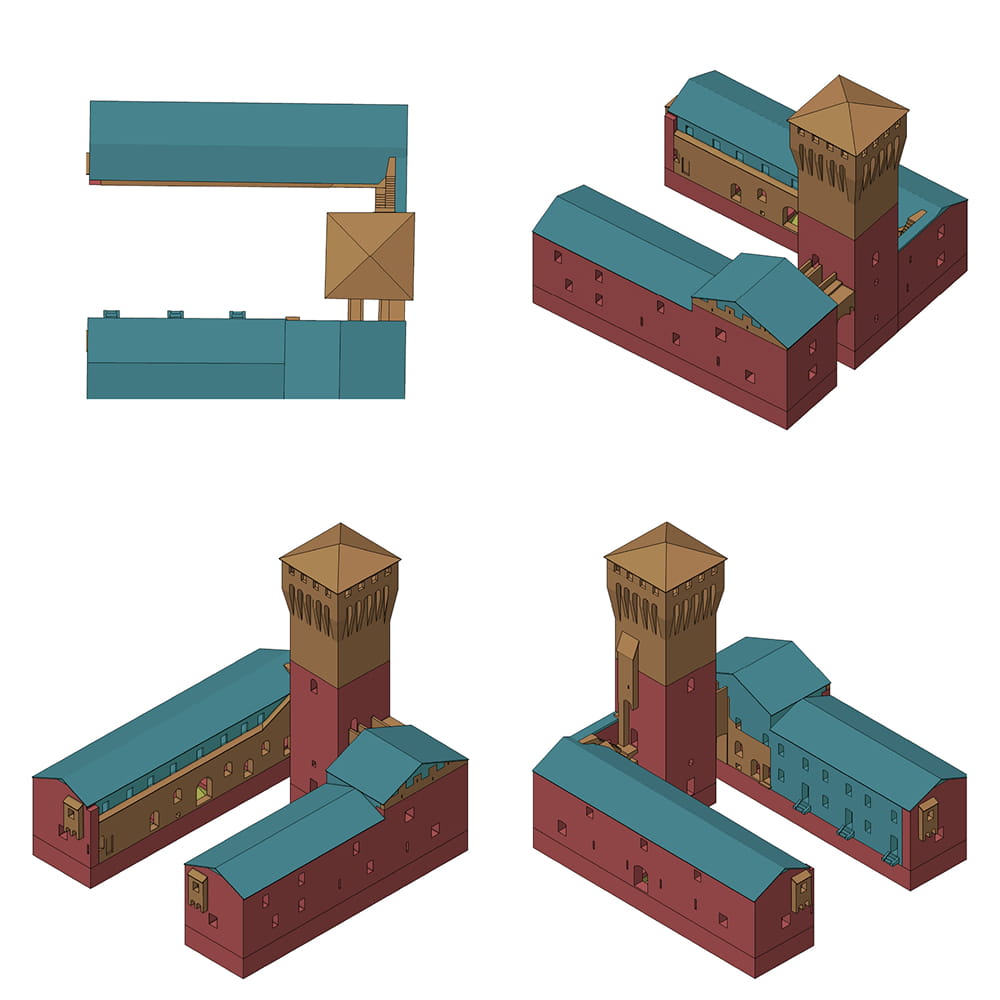
With the consolidation of Venetian rule, the defensive function lost importance and the castle entered a phase of civil adaptation. The surrounding area experienced economic development, and the complex became an infrastructure serving agricultural and productive activities.
The crenellations were removed, some roofs deteriorated, and sections of the enclosure wall were demolished to allow carts to pass through. Interior spaces were converted into warehouses and housing, reducing the military appearance of the structure. The architecture became simpler, prioritizing functionality over defense.
Listen to the audio
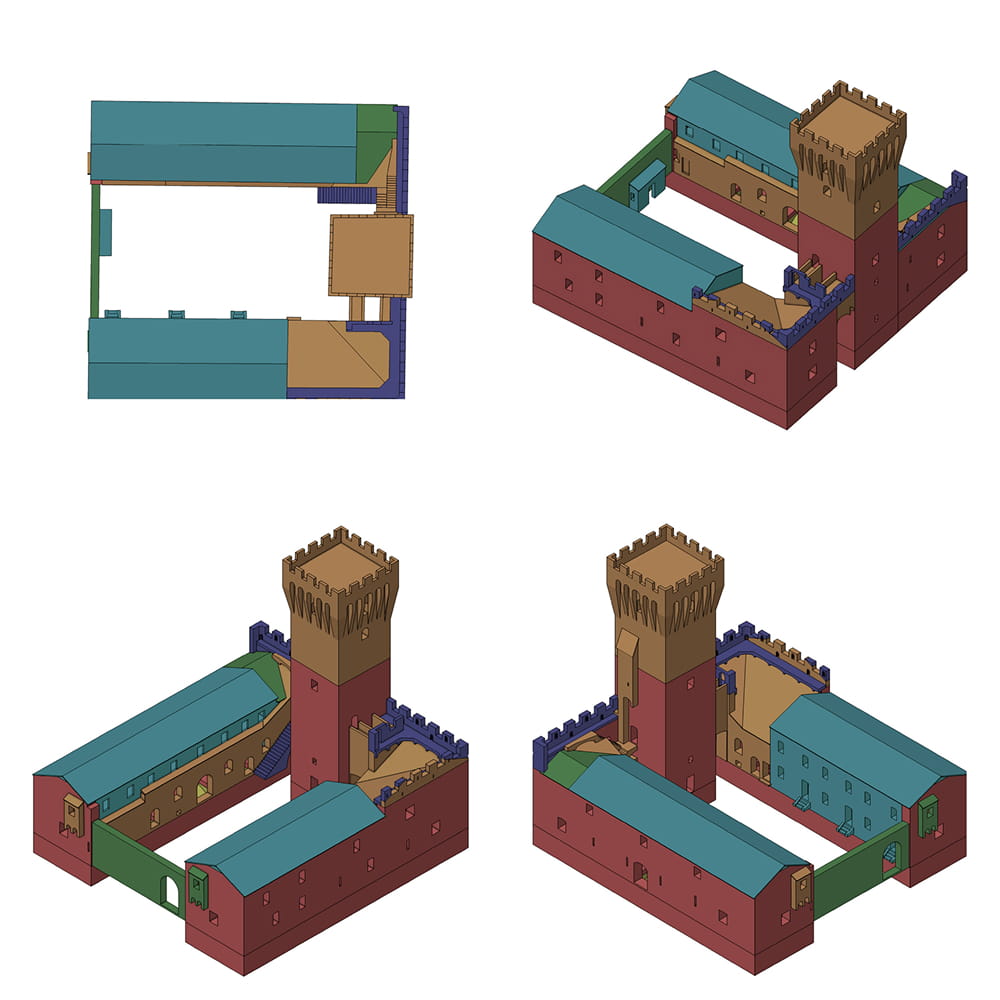
From the 16th century onward the castle became a private residence and a center for agricultural management. The military function had by then disappeared, but the structure continued to dominate the landscape as a historical landmark.
Interventions aimed to make the spaces habitable without erasing the medieval masonry. The eastern wing was partially rebuilt while respecting the original layout, and interiors and attics were adapted for civilian uses. The tower remained the visual and structural focal point of the complex.
Listen to the audio
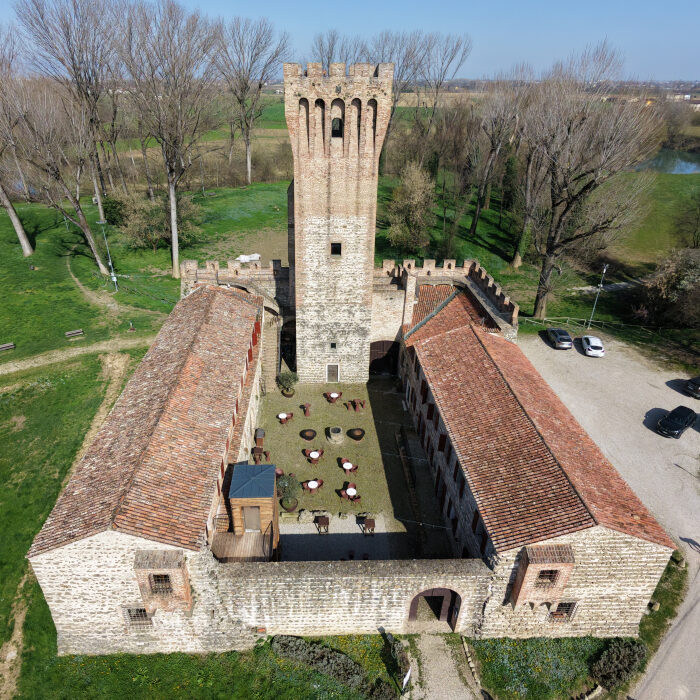
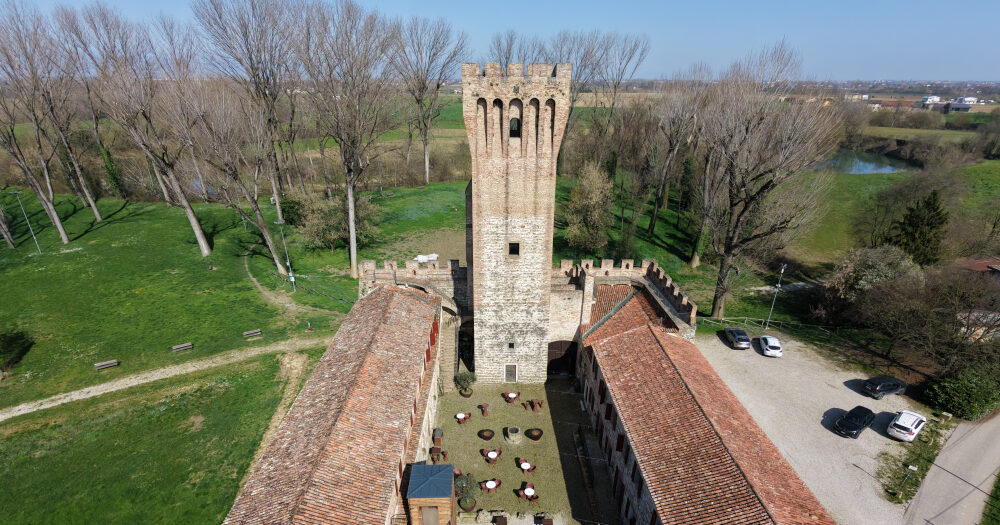
In 1935, the Papafava family undertook a significant restoration of the castle, aimed at consolidating and preserving its historical and medieval structures. This intervention took place during a period of growing attention in Italy to the protection of historical and architectural heritage, with the goal of safeguarding the historical memory of the site while adapting it to new residential and cultural needs. Although the castle no longer had a defensive or commercial role, it remained a symbol of local history and of the connection between the Bacchiglione River and the surrounding territory.
The 1935 restoration focused on reconstructing the crenellations and the wall walk on the northern and eastern sides of the tower and the enclosure. The masonry in trachyte and scaglia stone was consolidated while preserving the historical openings and the vertical sequence of the tower. The building structures were also subject to targeted interventions aimed at recovering parts of the medieval layout, particularly the eastern wing, ensuring both stability and historical readability. The Papafava restoration thus allowed the castle to survive deterioration and reach the present day as a tangible testimony to the long history of the settlement of San Martino.
Discover the archaeological collection from the Bacchiglione River
Cookie policy
Su questo sito utilizziamo strumenti propri o di terze parti che memorizzano piccoli file (cookie) sul tuo dispositivo. I cookie sono normalmente utilizzati per consentire il corretto funzionamento del sito (cookie tecnici), per generare rapporti sull’uso della navigazione (cookie statistici) e per pubblicizzare in modo adeguato i nostri servizi/prodotti (cookie di profilazione). Possiamo utilizzare direttamente i cookie tecnici, ma hai il diritto di scegliere se abilitare o meno i cookie statistici e di profilazione. Abilitando questi cookie, ci aiuti a offrirti un’esperienza migliore.