


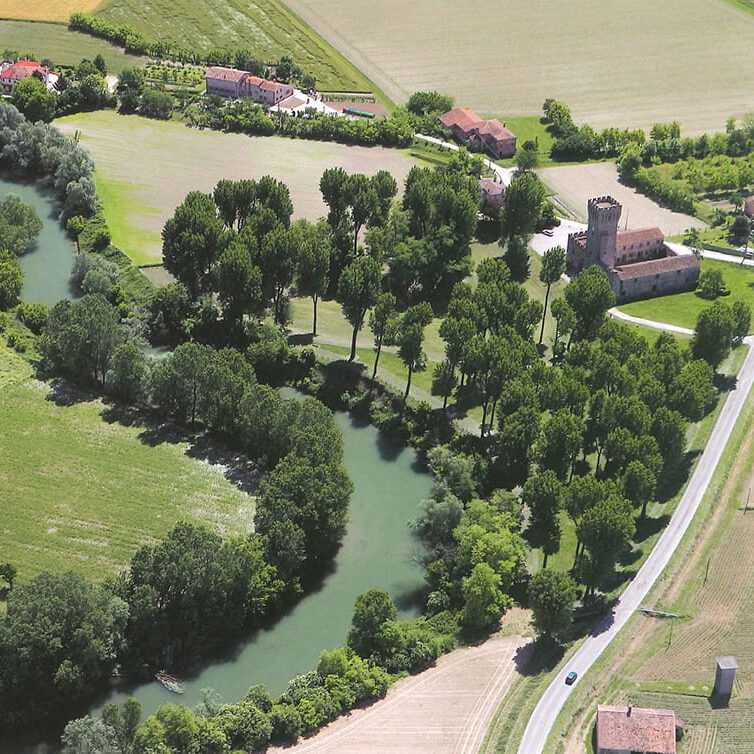
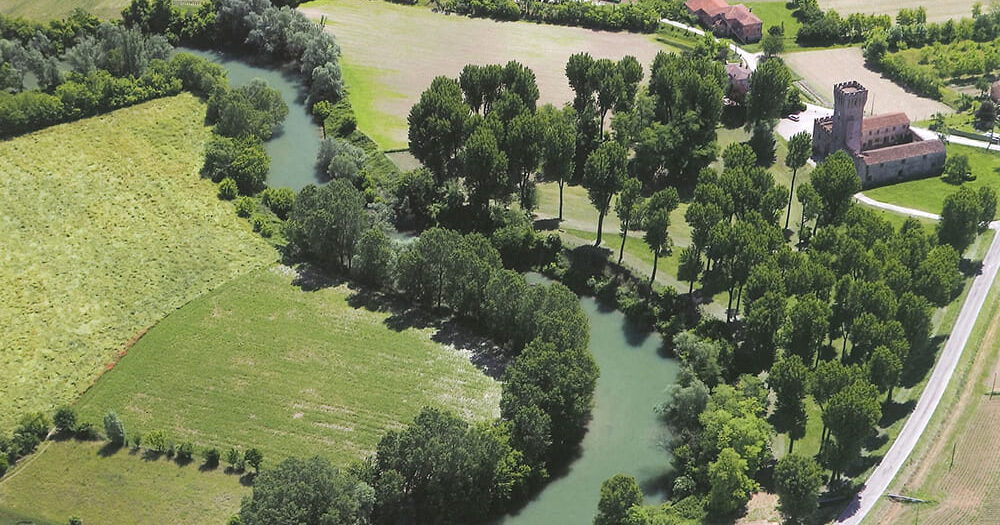
The Bacchiglione River represents one of the most important natural axes in the historical development of the Padua area. As a communication route, economic resource, and defensive infrastructure, it has shaped the organization of settlements and fortifications over the centuries. Its course encouraged commercial exchanges, mobility, and the strategic control of waterways, becoming a structuring element of both the urban and rural landscape. Understanding the history of Padua therefore also means reading the history of its river system.
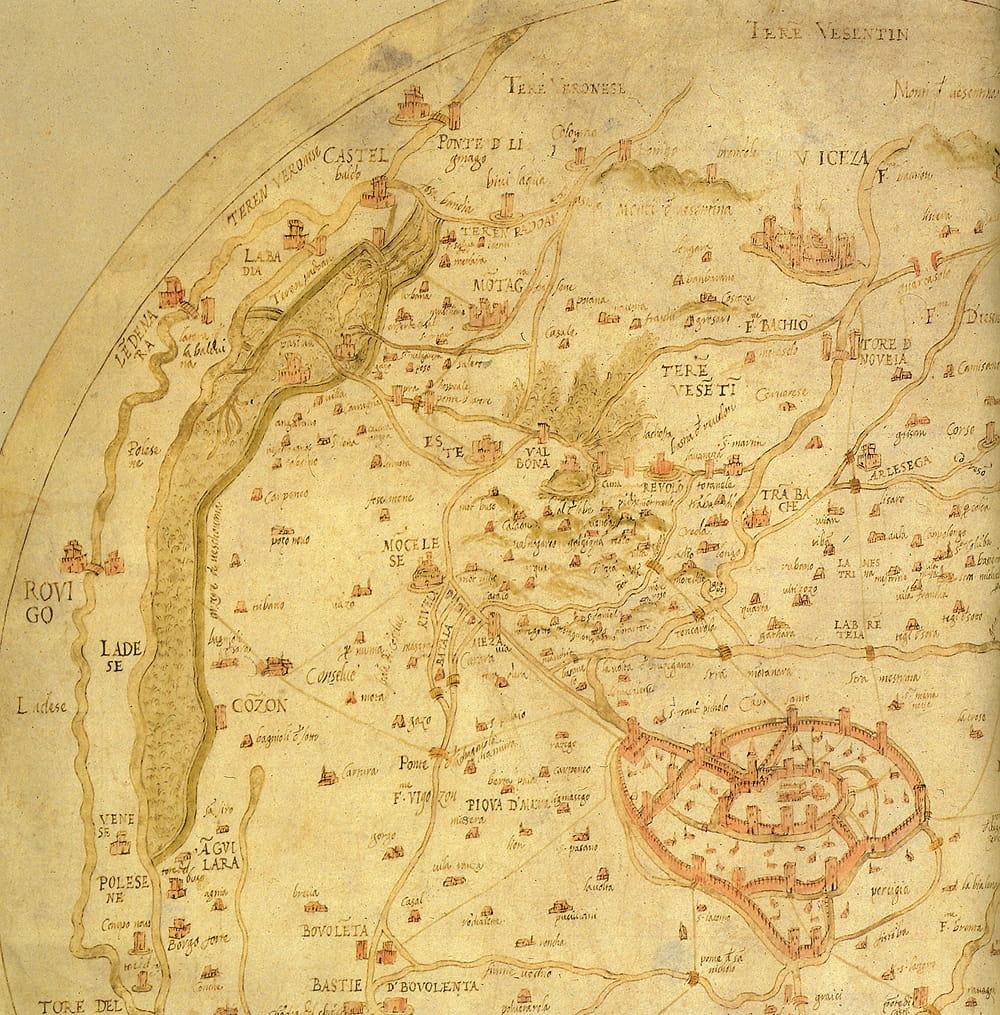
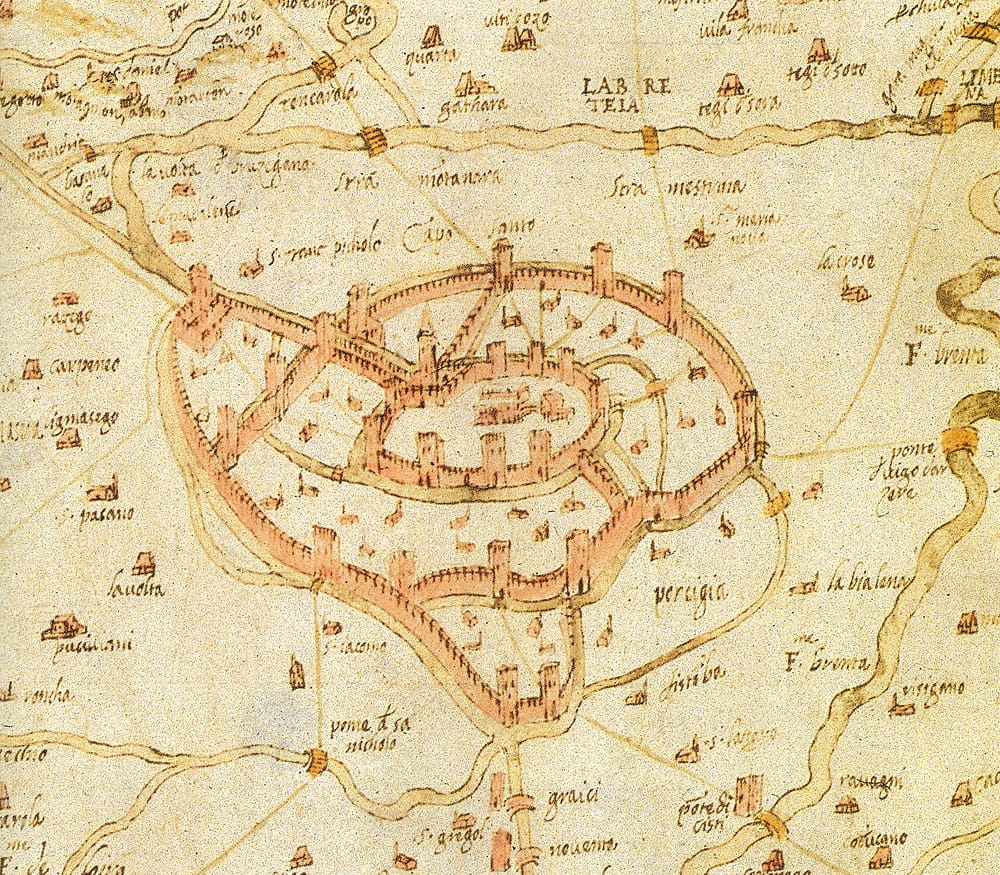
A 15th-century parchment map attributed to the circle of Squarcione represents, with political and military purposes, the defensive and hydraulic system of Padua and its strategic connection with Venice.
In the territory of Cervarese, the medieval fortifications connected to the control of the Bacchiglione—culminating in the Castle of San Martino della Vaneza—demonstrate the close relationship between the defensive system, river routes, and the political and military transformations between the communal and Carrarese periods.
Archaeological research conducted in the Bacchiglione has brought to light artifacts dating from the Bronze Age to the modern era, documenting the continuity of settlements, trade activities, and ritual practices along the river. Over the centuries, the Bacchiglione became a vital axis and a commercial infrastructure for the Padua region.
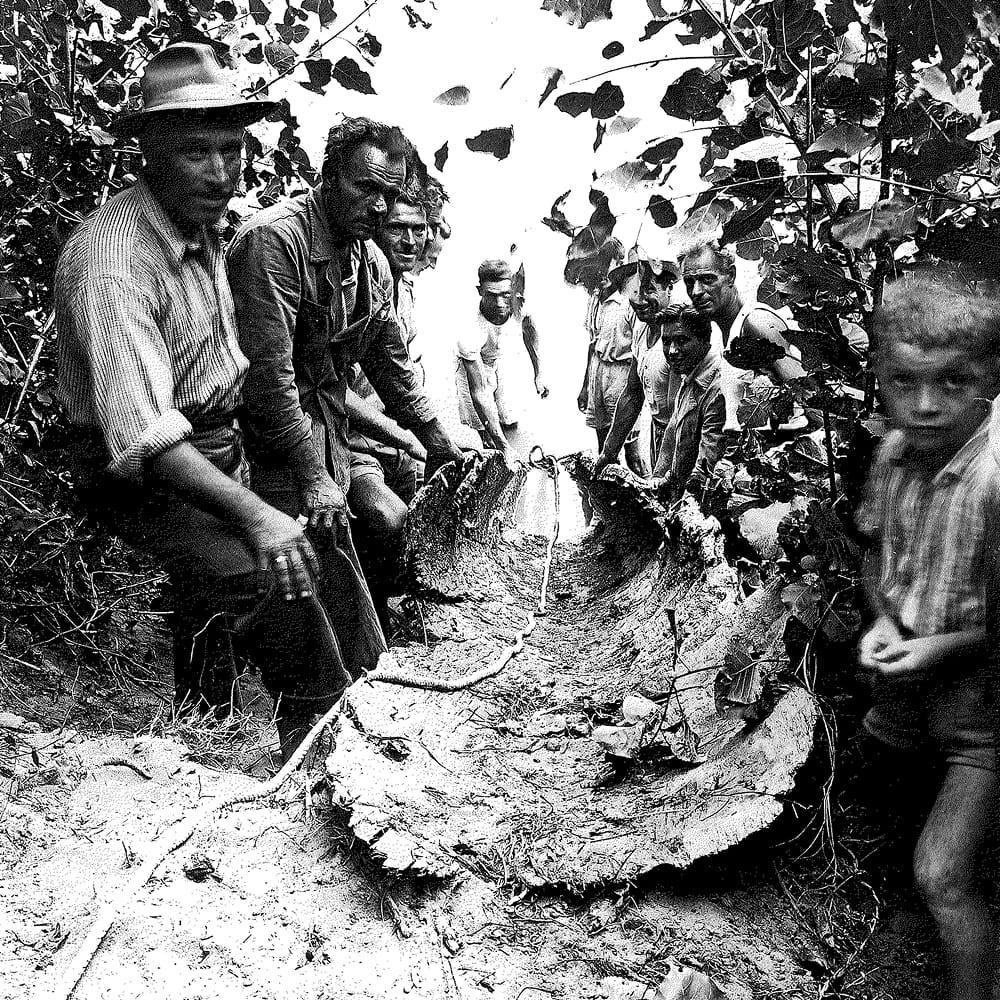
Discover the archaeological collection from the Bacchiglione River
Cookie policy
Su questo sito utilizziamo strumenti propri o di terze parti che memorizzano piccoli file (cookie) sul tuo dispositivo. I cookie sono normalmente utilizzati per consentire il corretto funzionamento del sito (cookie tecnici), per generare rapporti sull’uso della navigazione (cookie statistici) e per pubblicizzare in modo adeguato i nostri servizi/prodotti (cookie di profilazione). Possiamo utilizzare direttamente i cookie tecnici, ma hai il diritto di scegliere se abilitare o meno i cookie statistici e di profilazione. Abilitando questi cookie, ci aiuti a offrirti un’esperienza migliore.