





The castle within the local defensive system and its relationship with the fortified structures of the surrounding territory.
Listen to the audio
Medieval documentation provides the image of a territory—Cervarese—strongly marked by the presence of defensive structures that have largely disappeared today but were closely connected to the control of the Bacchiglione River. As early as 1272, notarial sources mention an area identified as the motta of the castle of Cervarese, that is, the earthen mound preserving the memory of an earlier fortification, probably belonging to the Counts of Vicenza and built in a strategic position along the river.
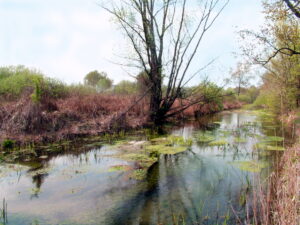
The reference to rights over the riverbed of the Bacchiglione and the location of the site confirm that the outpost had a direct function in supervising the waterways. At the beginning of the 14th century the fortification appears to have been restored, since in 1312 it was attacked and set on fire by Cangrande della Scala; a few months after the assault, the destruction was completed by the Paduans themselves, likely to prevent its reuse by the enemy. The sources also mention other defensive sites—such as the Castellare, surrounded by water, and a castle belonging to the municipality of Cervarese—testifying to the existence of a network of strongholds connected to river navigation routes.
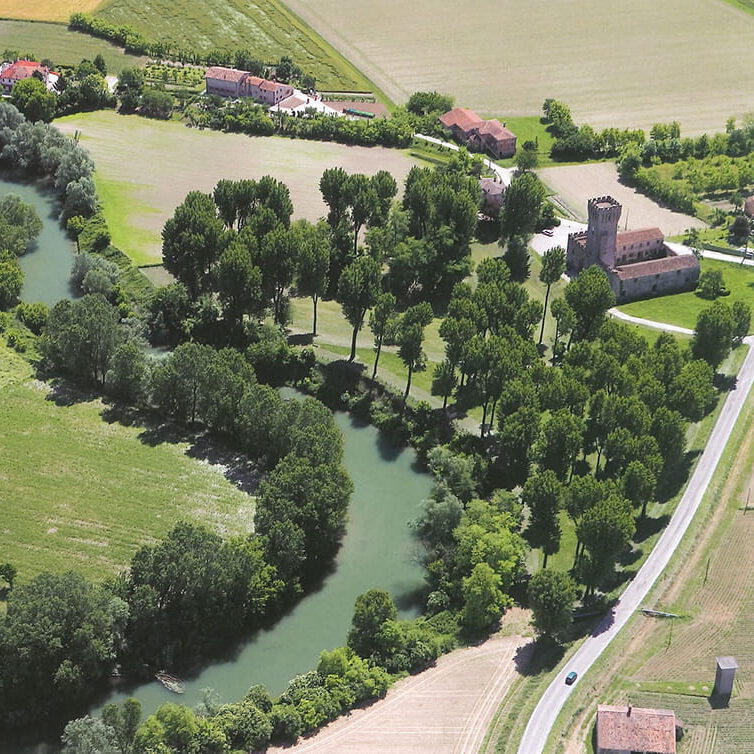
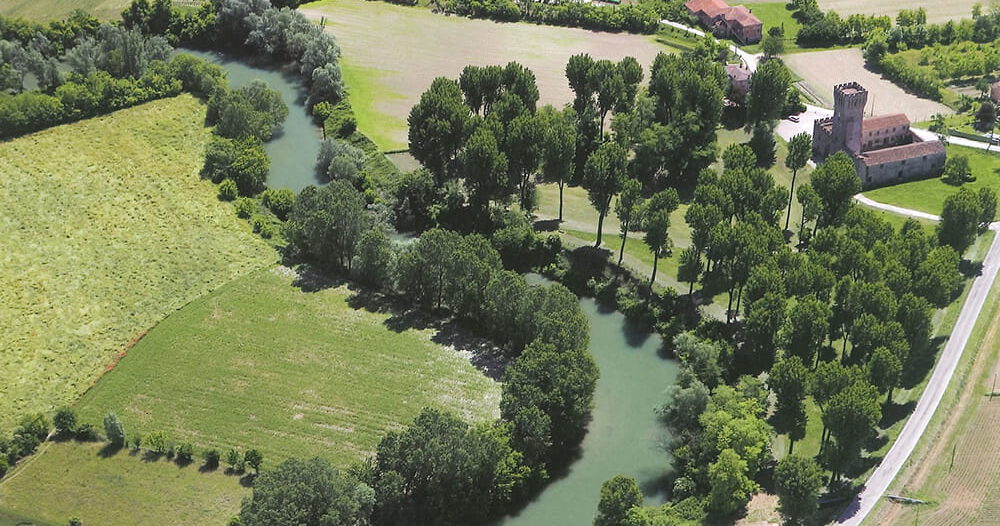
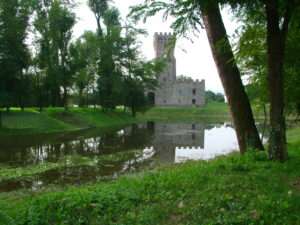
Within this context stands the Castle of San Martino della Vaneza, the only complex in the area that has preserved a readable medieval architectural structure. Built in an isolated position, not associated with a settlement but directly linked to the hydraulic junction between the Bacchiglione River and the Naviglio di Pedevenda canal, the castle became permanently integrated into the Paduan defensive system during the Carrarese period as an outpost against the Scaliger and Visconti territories of Vicenza.
Chronicles mention it between the late 14th and early 15th centuries as an operational base for military expeditions and a defensive point along the western border. A 15th-century map of the Paduan territory depicts it as a walled quadrangular complex with a prominent tower—an arrangement that, despite later transformations, is still recognizable today. Masonry analysis has identified an initial construction phase corresponding to the lower part of the tower and the original enclosure wall, followed by the Carrarese elevation of the structure and the construction of the internal buildings.
With the decline of its military function between the 15th and 16th centuries, the complex was converted for residential and commercial use, assuming a role connected to river navigation. In the 15th century, the castle became the terminal point of the circum-navigation route around the Euganean Hills, confirming the continuity of the relationship between fortified architecture and the hydraulic system.
Discover the archaeological collection from the Bacchiglione River
Cookie policy
Su questo sito utilizziamo strumenti propri o di terze parti che memorizzano piccoli file (cookie) sul tuo dispositivo. I cookie sono normalmente utilizzati per consentire il corretto funzionamento del sito (cookie tecnici), per generare rapporti sull’uso della navigazione (cookie statistici) e per pubblicizzare in modo adeguato i nostri servizi/prodotti (cookie di profilazione). Possiamo utilizzare direttamente i cookie tecnici, ma hai il diritto di scegliere se abilitare o meno i cookie statistici e di profilazione. Abilitando questi cookie, ci aiuti a offrirti un’esperienza migliore.