





N. inventario: IG 32374
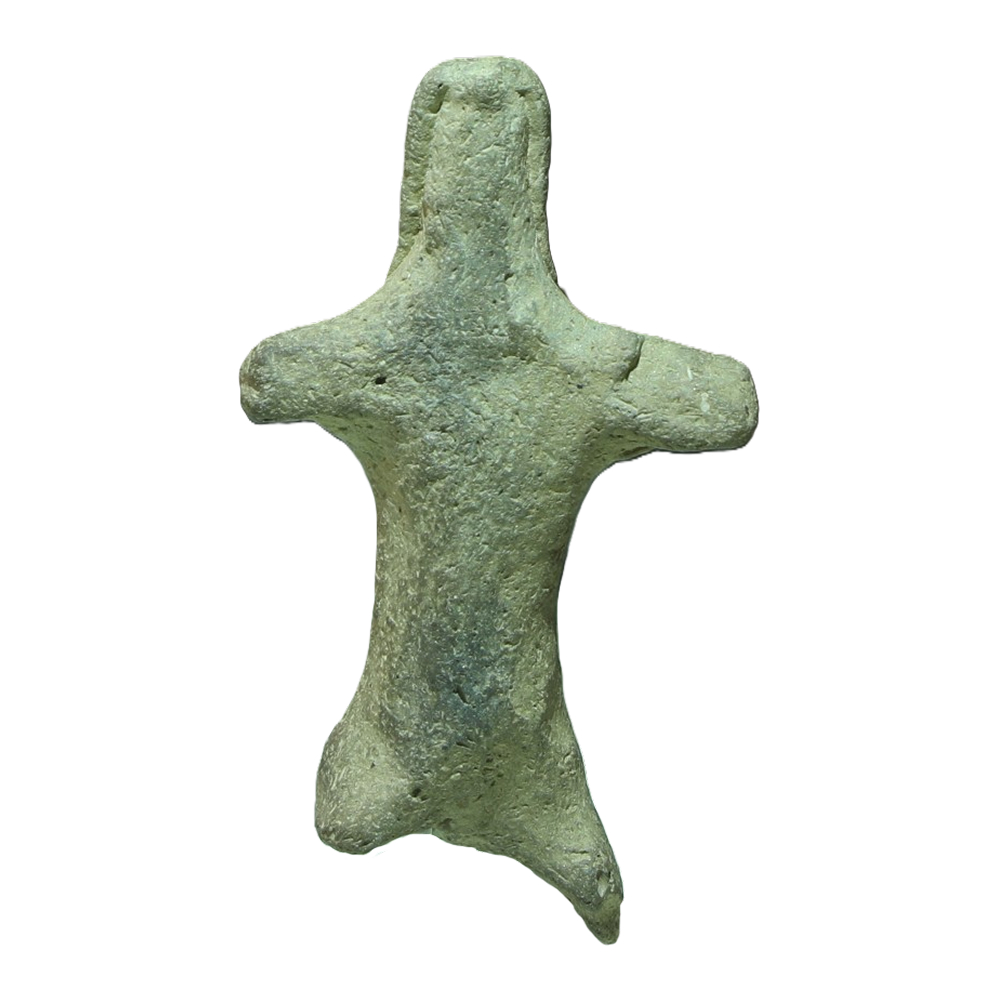
Terracotta votive figurine of a veiled orant with outstretched limbs.
| Teca |
Display case ritual sword |
|---|---|
| Collocazione | Museo del Fiume Bacchiglione, Castello di San Martino della Vaneza, Cervarese Santa Croce (Padua), Room XXX, Case XXX |
| Data | 5th–4th century BC (Late Iron Age) |
| Materiale | Refined clay |
| Misure | Height 6,5 cm |
This small terracotta statuette, just over six centimeters tall, comes from the area of Selvazzano Dentro and was recovered in 1974 along the Bacchiglione River. Today it is preserved at the Museo del Fiume Bacchiglione, in the Castello di San Martino della Vaneza. The object is datable to between the 5th and 4th centuries BCE, during the Late Iron Age.
The figurine depicts a highly stylized human figure, shown frontally in a standing position, with arms and legs outstretched. The extremities of the limbs have not survived, and the body is rendered in a very simple manner, without indication of gender or facial features. The only element suggesting a possible female identity is the presence of a veil on the head, subtly indicated but clearly recognizable.
The gesture of the raised arms identifies the figure as an orant, that is, a devotee captured in the act of prayer. This makes it an object closely associated with ritual and votive contexts, such as sanctuaries or offering deposits. In these settings, worshippers entrusted their requests or expressions of gratitude to the deity through the deposition of objects that symbolically represented them.
In the Padua area, and more broadly in northern Italy, this type of votive figurine is widely attested, but usually cast in bronze. The use of terracotta, as in this case, is much rarer, making this object particularly significant. Alongside stylized human figures, votive offerings often included small anatomical models, deposited to request the healing of specific body parts.
The presence of this statuette along the Bacchiglione River fits into a broader pattern of water-related ritual practices, since water was often considered to have healing and therapeutic properties. In its formal simplicity, this small object provides direct evidence of personal devotion and the religious beliefs of the communities that inhabited this territory between the 5th and 4th centuries BCE.
Bianchin Citton E., Malnati L. 2001, Reperti bronzei protostorici dai fiumi veneti, in Cresci Marrone G., Tirelli M. (eds.), Orizzonti del sacro. Culto e santuari antichi in Altino e nel Veneto orientale, Proceedings of the Conference (Venice 1999), Rome, pp. 201, 206, fig. 10b.
The figurine represents a standing devotee with arms extended in a gesture of prayer, and is closely connected with ritual and votive contexts such as sanctuaries and offering deposits.
It can be compared with a wide production of schematic human figurines, generally rather coarse in workmanship, documented in the Padua area. These examples are usually made in bronze, while the use of terracotta is considerably rarer in votive deposits in the Veneto region and more broadly in northern Italy.
In votive contexts, devotees expressed their requests or gratitude to the deity through the deposition of bronze figurines representing offerers, warriors, horsemen, or women, as well as through the offering of small anatomical models, symbolically representing parts of the body for which healing was requested. These practices are particularly associated with places where the presence of water was linked to healing rituals.
Cookie policy
Su questo sito utilizziamo strumenti propri o di terze parti che memorizzano piccoli file (cookie) sul tuo dispositivo. I cookie sono normalmente utilizzati per consentire il corretto funzionamento del sito (cookie tecnici), per generare rapporti sull’uso della navigazione (cookie statistici) e per pubblicizzare in modo adeguato i nostri servizi/prodotti (cookie di profilazione). Possiamo utilizzare direttamente i cookie tecnici, ma hai il diritto di scegliere se abilitare o meno i cookie statistici e di profilazione. Abilitando questi cookie, ci aiuti a offrirti un’esperienza migliore.