





N. inventario: IG 164101
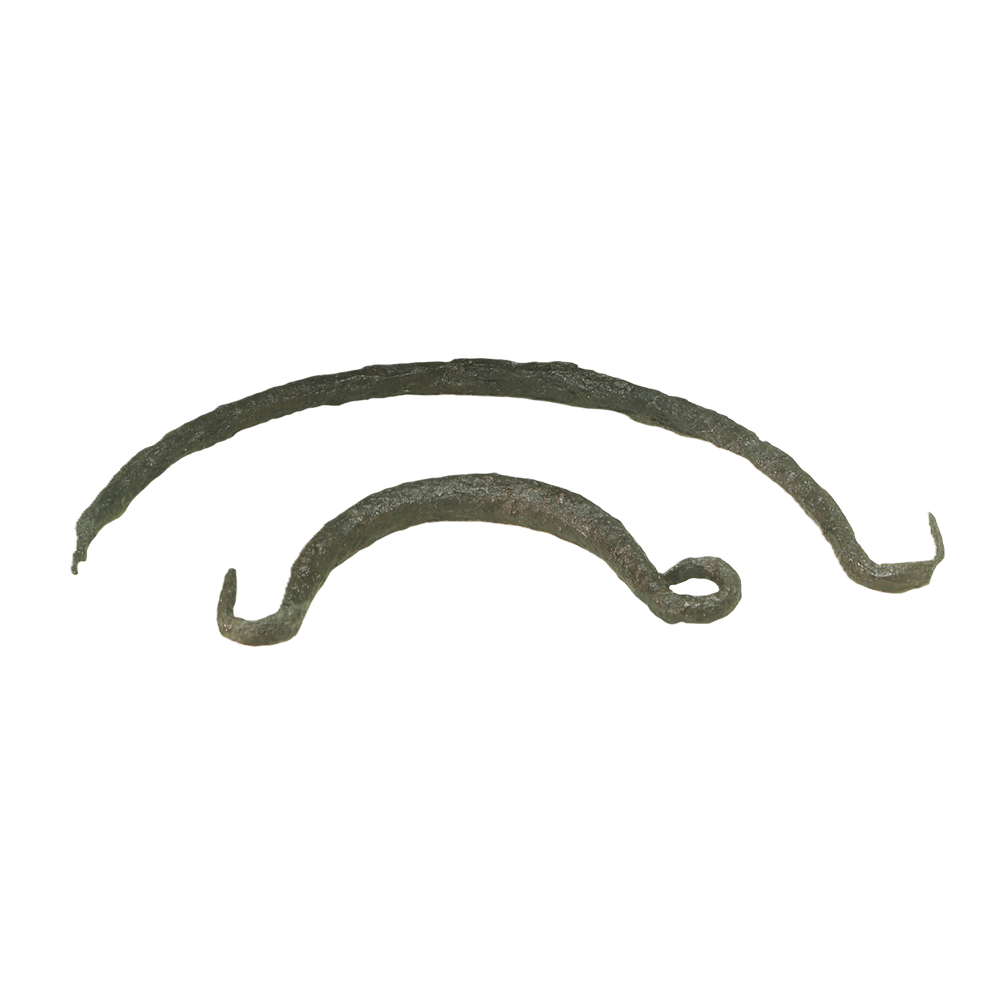
Two handles belonging to situlae or other types of metal containers.
| Teca |
Display case metal vessels |
|---|---|
| Collocazione | Museo del Fiume Bacchiglione, Castello di San Martino della Vaneza, Cervarese Santa Croce (Padua), Room XXX, Case XXX |
| Data | 4th–1st century BC (Late Iron Age) |
| Materiale | Iron |
| Misure | Width 9 cm and 10 cm |
These two iron handles come from the area of Cervarese Santa Croce and were recovered in 1983 along the course of the Bacchiglione River, in the locality of Trambacche. They are now preserved at the Museo del Fiume Bacchiglione, in the Castle of San Martino della Vaneza. The objects can be dated to a broad chronological range, between the 4th and 1st centuries BC, during the period of the Late Iron Age.
The handles originally belonged to two situlae, or more generally to metal containers made of bronze or iron. Both consist of a circular-section iron rod with tapered and bent ends, a design that allowed them to be attached to the fittings on the body of the vessel. The two examples show some differences: the larger handle maintains a uniform thickness along its length, while the smaller one has a slightly thickened central section, probably to ensure a firmer grip or greater strength.
In antiquity, almost all metal vessels were equipped with handles, except for some specific types that lacked them, such as the Prà d’Este-type situla. Metal vessels held high material and symbolic value and were mainly used to contain and serve alcoholic beverages during the symposium or on ritual occasions.
At the end of their domestic use, these containers could be repurposed as ossuary vessels, intended to hold the cremated remains of the deceased, often an aristocratic individual. In such cases, the handle and its fittings were intentionally removed, rendering the vessel unusable in daily life. Through this act of defunctionalization, the container was symbolically identified with the deceased: the end of its use coincided with the conclusion of the person’s earthly life, emphasizing the ritual and commemorative significance of the object.
Bianchin Citton E., Malnati L. 2001, Reperti bronzei protostorici dai fiumi veneti, in Cresci Marrone G., Tirelli M. (eds.), Orizzonti del sacro. Culto e santuari antichi in Altino e nel Veneto orientale, Proceedings of the Conference (Venice 1999), Rome, pp. 197–223.
Almost all metal vessels (bronze or iron) were equipped with handles, except for some specific types that lacked them, such as the Prà d’Este-type situla. Metal vessels had considerable value and were generally used to contain alcoholic beverages during banquets or ritual ceremonies.
At the end of their domestic use, they were sometimes reused as ossuary containers to hold the cremated remains of the deceased, usually an individual of aristocratic status. In these cases the handle and its fittings were deliberately removed so that the vessel could no longer be used. Once defunctionalized, the container became symbolically identified with the deceased: the end of the individual’s earthly life thus coincided with the conclusion of the vessel’s functional cycle.
Cookie policy
Su questo sito utilizziamo strumenti propri o di terze parti che memorizzano piccoli file (cookie) sul tuo dispositivo. I cookie sono normalmente utilizzati per consentire il corretto funzionamento del sito (cookie tecnici), per generare rapporti sull’uso della navigazione (cookie statistici) e per pubblicizzare in modo adeguato i nostri servizi/prodotti (cookie di profilazione). Possiamo utilizzare direttamente i cookie tecnici, ma hai il diritto di scegliere se abilitare o meno i cookie statistici e di profilazione. Abilitando questi cookie, ci aiuti a offrirti un’esperienza migliore.